




If you’re still optimizing for the ten blue links, you’re optimizing for a search engine that no longer fully exists.
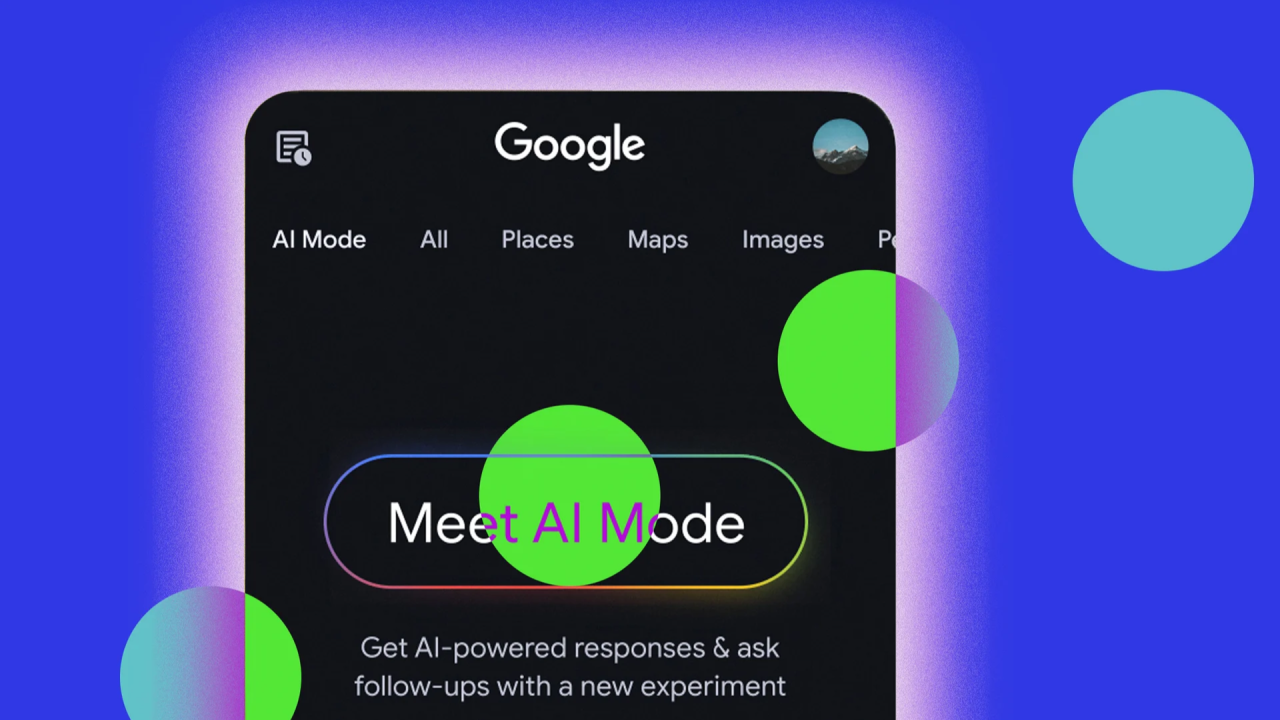
Google is now entering a new era with AI powered search.
With this new AI mode, there are no longer traditional blue links and website listings that we all used to use.
Instead of blue links Google now delivers conventional AI-generated answers directly inside search results.
AI Mode is a Gemini-powered search experience that goes further than AI Overviews. Rather than a quick summary at the top of the page, AI Mode operates more like a ChatGPT-style conversation — users can ask complex, multi-part questions and receive synthesized, sourced answers without ever clicking away.
This new shift can effectively change how web sites earn visibility, traffic, and conversions online. When an AI Overview appears above traditional results, the #1 organic position loses approximately 18% of its clicks.
The data isn’t all doom. Sites that earn a citation inside an AI Overview can see CTR increases of up to 35%. Brands mentioned in AI responses experience a 91% higher paid CTR — the halo effect is real and extends well beyond organic.
The new goal isn’t ranking. It’s being cited. That changes everything about your content strategy.
Google AI Mode vs Traditional Search
Traditional Google Search focused on ranking webpages based on relevance, authority, and SEO optimization. Users clicked links to find information themselves.
AI Mode changes that behavior completely.
Instead of:
- searching
- opening websites
- comparing results
- reading multiple pages
Users now receive:
- summarized answers
- recommendations
- product suggestions
- research reports
- task assistance
- conversational follow-ups
The biggest concern for SEOs is that users may no longer need to visit websites to get answers.
How Google AI Mode Works
Google AI Mode uses a custom Gemini-powered system that performs multiple searches simultaneously using what Google calls a “fan-out” approach.
Instead of relying on one query, AI Mode breaks a question into multiple smaller searches to better understand intent and gather more accurate information.
For example, if someone asks:
“Help me plan a home renovation project under $50,000.”
AI Mode may separately search:
- renovation timelines
- contractor costs
- material pricing
- financing options
- local recommendations
- design inspiration
It then combines all this information into one AI-generated response.
This allows Google to provide more detailed and personalized answers than traditional search.
Key Features Of Google AI Mode
| Capability | Purpose | Example |
|---|---|---|
| Deep Search | Generates detailed reports with citations | “Research the costs and timeline of renovating a home” |
| Live Search | Uses audio and video in real time | “Help me identify which screw fixes this table” |
| Agentic Actions | Completes tasks for users | “Find and buy concert tickets” |
| AI Shopping | Personalized product recommendations | “Find dresses for a summer wedding” |
| Personal Context | Uses Gmail and history for personalization | “Recommend restaurants for my Oregon trip” |
Deep Search
Purpose: Generates detailed reports with citations
Example: “Research the costs and timeline of renovating a home”
Live Search
Purpose: Uses audio and video in real time
Example: “Help me identify which screw fixes this table”
Agentic Actions
Purpose: Completes tasks for users
Example: “Find and buy concert tickets”
AI Shopping
Purpose: Personalized product recommendations
Example: “Find dresses for a summer wedding”
Personal Context
Purpose: Uses Gmail/history for personalization
Example: “Recommend restaurants for my Oregon trip”
How Google AI Mode Impacts SEO
Google AI Mode could significantly change the future of SEO, and with that it can bring lots of impacts.
1. Reduced Organic Traffic
AI-generated answers reduce the need for users to click websites.
Many publishers are already reporting:
- lower click-through rates
- declining informational traffic
- more zero-click searches
Websites that depend heavily on informational blog traffic may see the biggest declines.
2. Increased Importance of Brand Authority
In AI search, trust matters more than keyword stuffing.
Google’s AI systems are more likely to cite:
- recognized brands
- expert content
- authoritative sources
- businesses with strong reputations
This means SEO is becoming more connected to branding, PR, reviews, and thought leadership.
3. Fewer Opportunities for Visibility
Traditional search allowed multiple websites to rank on page one.
AI Mode may only reference a small number of sources inside its generated answer.
That creates a “winner takes most” environment where only the most trusted sources receive visibility.
4. More Personalized Search Results
AI Mode can use:
- location
- search history
- connected Google apps
- Gmail data
- user preferences
This means SEO becomes more dynamic and personalized than ever before.
Two users searching the same query may receive completely different responses.
Is SEO Dead?
No — but SEO is changing rapidly.
The future of SEO is not about gaming algorithms or publishing endless low-quality articles.
The future of SEO is about:
- becoming a trusted source
- building authority
- creating unique insights
- producing original content
- improving user experience
- being visible across multiple platforms
SEO is evolving from “ranking pages” to “earning AI trust.”
Why Omnichannel SEO Matters
SEO is no longer limited to Google Search.
Users now discover brands through:
- ChatGPT
- Perplexity
- YouTube
- TikTok
- voice assistants
This shift is creating what many marketers call “Search Everywhere Optimization” or Omnichannel SEO.
Brands that rely only on Google traffic are becoming increasingly vulnerable.
The future belongs to businesses that build visibility across multiple platforms and channels.
The Future of SEO in 2026
SEO is entering a completely new phase.
The old model focused on:
- rankings
- clicks
- keyword density
- backlinks alone
The new model focuses on:
- authority
- trust
- relevance
- user experience
- personalization
- omnichannel visibility
Businesses that adapt early will gain a massive advantage.
Those that continue relying on outdated SEO tactics may struggle as AI search adoption increases.
Practical SEO Checklist for 2026
To adapt effectively, focus on the following:
Content Strategy
- Create high-quality, user-focused content
- Address specific search intents
- Provide clear and detailed information
Technical Optimization
- Ensure fast loading speeds
- Optimize for mobile devices
- Maintain a clean site structure
Authority Building
- Acquire quality backlinks
- Build a strong brand presence
- Publish consistently within your niche
Ongoing Optimization
- Update existing content regularly
- Use structured data
- Improve internal linking
Google’s AI-driven transformation represents a fundamental shift in how search engines function. Success in SEO is no longer about simply optimizing for algorithms — it is about creating meaningful, trustworthy, and user-focused content.
Websites that adapt to these changes by prioritizing quality, relevance, and authority will continue to grow. Those that rely on outdated tactics may struggle to maintain visibility.
The key is to evolve with the system and focus on delivering real value to users.
“`

