




Artificial Intelligence in the Modern World
Artificial intelligence (AI) has become a phenomenon in today’s world, encompassing nearly all areas of human activity. While in the past it was primarily associated with robots of various types and purposes by ordinary people—and with the cult classic film The Matrix by cinema lovers, where the protagonist Neo wages an uncompromising battle against AI that has enslaved humanity—the revolutionary release of ChatGPT in 2022 radically changed this perception. Today, AI has become an accessible conversational partner for millions, capable of assisting in solving everyday problems. Technology is advancing at a rapid pace, and each new stage opens up unprecedented opportunities.
Artificial Intelligence: Core Indicators and Progress
Artificial intelligence is a collection of algorithms and programs that enable computers to analyze information and make decisions similarly to the human mind.
Years of research have led the scientific community to a consensus that the foundation of AI must be based on the following key characteristics of human cognition:
The ability to accumulate diverse experience and knowledge through interaction with the environment;
The ability to effectively learn from accumulated information;
An advanced capacity to adapt to ever-changing conditions;
The ability to interact effectively with the external world using acquired skills and knowledge.
The main feature of AI is not only its capacity to study and adapt to the surrounding world but also to actively influence and modify it according to its needs. AI is developing simultaneously in two independent yet complementary directions:
Cybernetics and neuromodeling, involving in-depth study of neural networks through complex biological experiments that aim to understand the principles of natural intelligence;
Logical direction, aimed at creating highly efficient systems with complete logical thinking and natural language communication capabilities.
A Brief History of Artificial Intelligence
The first serious attempts to create mechanisms resembling the precursors of artificial intelligence date back to the 16th century with the invention of the first mechanical calculators. However, the idea of endowing inanimate objects with intelligence had existed long before. Ancient civilizations—such as Greece, Japan, and Jewish settlements—created fascinating mechanical devices, golems, and automaton dolls that can be seen as humanity’s early attempts to create artificial intelligence.
A revolutionary contribution came from the German philosopher and scientist Gottfried Wilhelm Leibniz, who proposed the innovative idea of describing human thought through simple mathematical symbols. His invention of the binary number system later became the foundation of all modern cybernetics and digital technologies.
The Rise of the Modern AI Era
Significant progress was made in the 1910s with the foundational work of Bertrand Russell and Alfred North Whitehead, who formulated the key principles of mathematical logic. However, serious development truly began in the 20th century with the scientific community’s interest in neural networks.
World War II, which barely touched U.S. soil, allowed American scientists to focus on research. In 1943, cyberneticist Warren McCulloch and mathematician Walter Pitts contributed significantly to AI by introducing the term into scientific discourse.
Just a year later, John von Neumann proposed a revolutionary architecture that later became the foundation for all modern computer systems. Known today as the Von Neumann architecture, it remains a cornerstone of computer design.
The year 1948 was pivotal, with the publication of two major works: Norbert Wiener’s Cybernetics and Claude Shannon’s Information Theory, which laid the theoretical foundation for the development of information technologies and artificial intelligence.
In 1951, two landmark events occurred. First, Alan Turing developed his famous Turing Test, a classical method for determining the presence of “strong” AI. According to this test, if a human could not distinguish whether they were communicating with a person or a computer, the AI was considered “strong.” That same year, the SNARC machine was built—the first in history based on neural networks—ushering in a new era of AI development.
An Era of Active Development and Early Achievements
The following decade saw significant contributions from Soviet cyberneticists, whose work gained international recognition. Notably, Dmitri Pospelov and Mikhail Tsetlin laid the foundation for the Russian AI school. This period witnessed the emergence of the first talking robots, including:
Eliza (1965) – a simplified psychotherapist chatbot capable of conducting patient interviews.
Shakey (1969) – a robot with a unique ability at the time to move autonomously.
The 1980s marked a true breakthrough. Robots increasingly entered everyday life and learned to conduct basic dialogues. A historical milestone was the first victory of a computer over chess super-grandmaster Bent Larsen. The legendary match between Garry Kasparov and a computer program is particularly notable—he initially doubted that a machine could beat him. Although Kasparov won in 1996, he suffered a historic defeat the following year.
Periods of Stagnation and “AI Winters”
AI development has not been a steady upward climb; there have been setbacks known as “AI winters.”
First AI Winter (1974–1980): Triggered by the 1969 publication of Perceptrons by Marvin Minsky and Seymour Papert, which shifted research focus from neural networks to symbolic computation. The perceptron—a cybernetic model of the brain—was the first neurocomputer introduced in 1960 as Mark-1. Despite advances in symbolic reasoning, expected breakthroughs never materialized, and interest waned.
Second AI Winter (1987–1993): Marked by a decline in enthusiasm and funding, even though projects like the XCON expert system saved DEC $40 million over six years. However, Japan’s ambitious fifth-generation computer project failed to meet expectations, leading to investor disappointment and a funding cutback.
The Current State and Future of AI
The 1990s brought a qualitative leap with the emergence of intelligent agents—complex systems capable of performing assigned tasks autonomously for long periods. The next critical phase was training these agents to interact effectively with one another, opening new horizons for AI development.
Leading Global Companies in AI Development
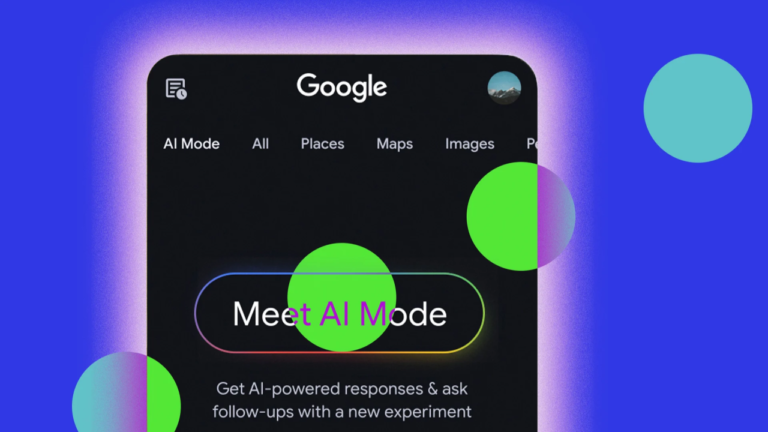
Google plays a prominent role in AI development. It has achieved outstanding results in search engines and mobile operating systems. Google’s products rely on APIs, which facilitate efficient communication between applications. Its AI APIs enrich applications with features like facial recognition and cybersecurity.
Google’s current AI focus includes multilingual translation and call center scripting, though its broader portfolio spans advanced search engines and autonomous vehicles.
Microsoft is another tech giant, offering over 600 services via Azure AI in areas such as:
Advanced software and app development,
Fault-tolerant data storage and processing,
Lightning-fast test environment deployment,
Scalable infrastructure solutions.
With nearly 2,000 training modules, Azure is one of the most developer-oriented platforms. It understands natural speech, makes complex predictions, and identifies code errors.
Another major project, Cognitive Services, provides developers with advanced platforms and tools. Notable Microsoft AI products include Skype Translator and the Cortana voice assistant.
Baidu, a Chinese tech company, has recently gained attention with its Ernie chatbot. Since its launch in March 2023, its functionality and search capabilities have expanded. However, experts note that the project’s commercial potential has been somewhat underestimated in favor of technological enthusiasm.
OpenAI revolutionized the AI world with its well-known ChatGPT project, a model capable of generating human-like language based on input data. The company also leads in creating educational programs, continually pushing the boundaries of AI.
Forecasts and Prospects for AI Development
Modern AI systems have already achieved remarkable success in mastering core human skills: they communicate effectively in natural language, learn from experience, and make informed decisions in complex situations.
Although the creation of a unified AI capable of fully replacing humans across all domains remains a challenge for the future, current systems are successfully serving as assistants in various fields.
AI acts as an efficient advisor in education, helping millions learn, and as an assistant in medicine, aiding in diagnostics and treatment planning. Its role continues to expand, opening new opportunities for human-machine collaboration.
Upcoming breakthroughs are expected in:
Revolutionary progress in medicine, especially in therapy (including genetics) and personalized treatment;
Development of more advanced systems for analyzing massive data sets and automated recognition;
Creation of robots and drones with intelligence sufficient for fully autonomous operation;
Deep contextual understanding by AI;
Fundamental changes in the education system.
