The world of modern logo design is constantly changing, and new trends can significantly affect the perception of brands. Looking at this year’s innovations, we can highlight several key trends that are shaping the look of logos. Understanding which logos are trendy in 2025 will allow companies to create a recognizable image and stand out from the competition.
The Demand for Minimalism
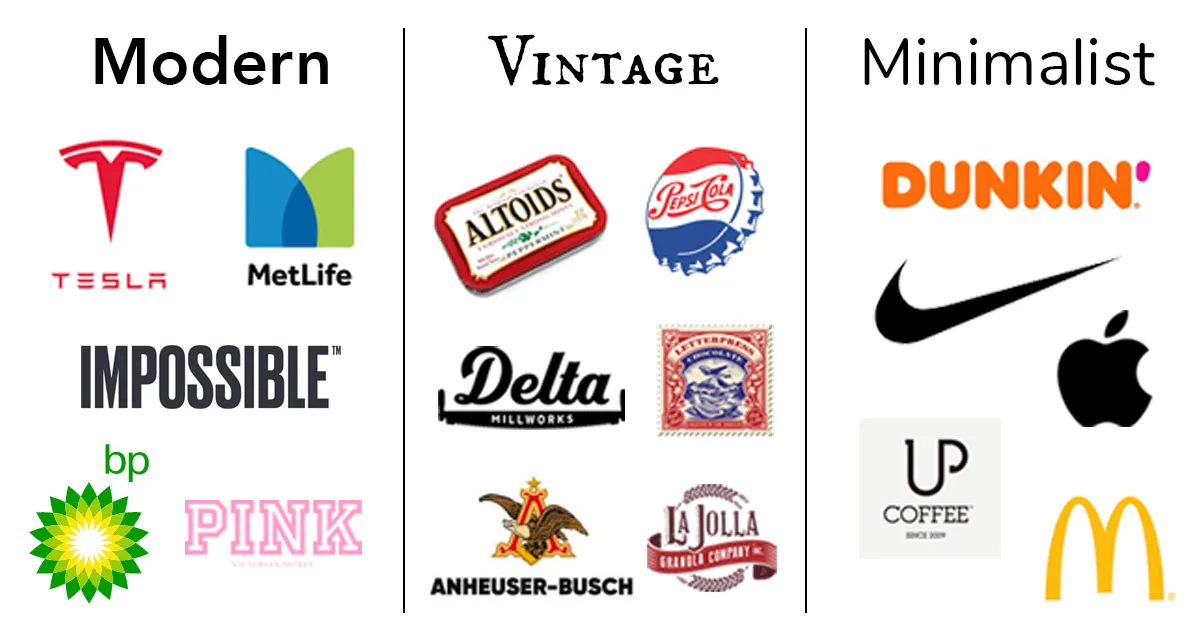
Minimalism remains a dominant trend in logo design, but it’s not standing still. Designers are experimenting with negative space and subtle color gradients to add depth to such designs.
This trend has recently taken hold in the digital design world. There are a few reasons for this.
First, simplified logos are more visually appealing on screens.
Additionally, displaying fewer pixel elements means faster loading times.
Another notable point about all this is that such a design looks great at both small and large sizes. This means that it can be embedded in almost any object and the logo will still look high-quality.
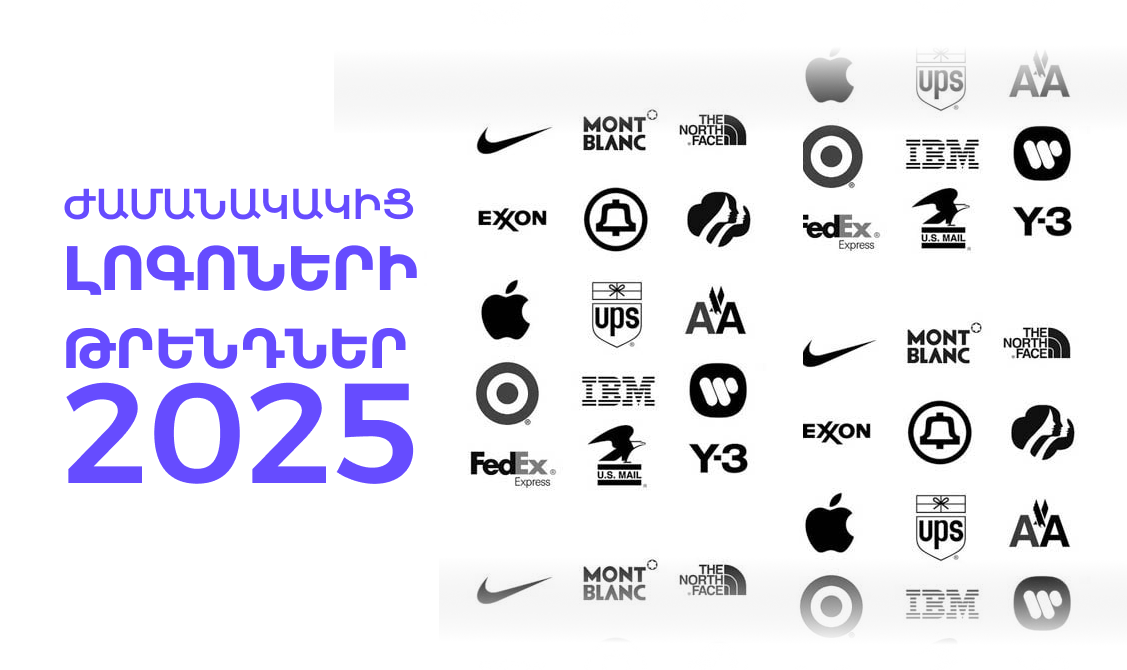
Many companies have seen the potential of minimalism in logo design in terms of marketing value. As a result, many brands have moved from complex logos to simpler ones. These include Starbucks, Apple, and McDonald’s.
Custom Printing
One of the 2025 logo trends is the flexibility of customization, which allows designers to experiment with different styles, combining tradition with modern innovation.
Here, custom printing adds a unique character to the design. This approach allows for greater creativity and ensures that no two logos are the same.
Pay attention to elements such as letter spacing, thickness, and shape to ensure that your typography is both legible and unique. Tools like Adobe Illustrator or FontForge can help you refine your design with precise adjustments.
Benefits:
Improves brand recognition.
Creates a unique identity that resonates with your target audience.
A unique font can be registered as a trademark, providing legal protection and preventing others from using similar designs.
3D and isometric designs
With the development of digital design tools, 3D and isometric logos are becoming more accessible. These effects add depth and realism, making the logo more tangible and engaging.
Through the use of lighting, shadows, and angles, 3D logos give brands a dynamic, realistic feel that draws attention. This trend is especially suitable for brands in the gaming, technology, and entertainment sectors, where visual interaction is key to brand recognition and appeal.
Key features:
Use of depth and shadow for a realistic effect.
Strong geometric and spatial elements.
Ideal for brands focused on technology and entertainment.
Bold colors and gradients
Gradients have once again become a popular tool for adding depth and dimension to stylish logos. This trend is in line with the increasing use of digital platforms, where color can play a significant role in user engagement.
In the coming year, expect bright gradients that create dynamic, eye-catching designs. This trend works especially well for technology companies and brands that strive to communicate innovation.
Rather than simply mixing colors, designers are taking a more creative approach. They are experimenting with related hues to create interesting and playful color combinations.
Implementation strategy:
Experiment with color combinations that evoke the right emotions for your brand.
Consider color psychology when choosing a color palette.
Combine gradients with textures and patterns to create unique visual effects.
Hand-drawn logos
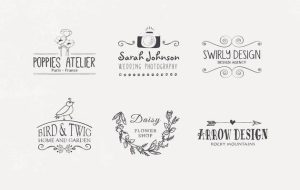
Handmade designs often feature organic shapes, rough lines, and earthy colors that give a brand a unique and personalized look. They are especially popular in industries that emphasize sustainability and handmade quality, where the logo itself can reflect the company’s ethos.
Characteristics:
Organic, imperfect shapes and lines.
Contrary to digital trends, hand-drawn logos retain their long-lasting appeal.
Hand-drawn elements can be adapted to different styles.
Stylish geometric logos
Geometric shapes are ideal for logos that need to be symbolic. Curved edges convey lightness, squares convey a sense of strength, triangles convey stability, and so on. These are positive attributes that companies would like to associate their brand with.
Designers give shapes a warm, cheerful look to evoke a sense of calm and happiness. However, perhaps the biggest advantage of geometric logos is the simplification of complex shapes. Logos can be placed on both small and large objects, screens, etc. Therefore, it is important that they remain distinguishable even at small sizes. Good geometric design ensures that a small version of the logo is not reduced to a random scribble.
Key features:
Geometric shapes in logos carry symbolic meaning.
Geometric logos appeal to modern brands with their minimalist aesthetic.
Designers can modify or combine basic shapes to enhance uniqueness while maintaining geometric simplicity.
Retro revival
Nostalgia continues to be a powerful force in design, and retro logos are making a comeback. Designers are taking inspiration from the aesthetics of the 70s, 80s, and 90s, adding bold colors, vintage typography, and classic motifs. The result is a dynamic mix of old and new that resonates with different age groups.
Key elements of vintage:
The presence of soft tones (beige, cream, pastels) as well as earthy tones (brown, green).
Text is centered and framed by elements. Layered elements match icons, text, and banners.
Worn, grainy, or faded effects for a retro aesthetic.
This trend not only plays on consumers’ emotions, but also offers versatility, allowing brands to give a modern twist to outdated visuals while maintaining a fresh design while drawing inspiration from the past.
This mode enables people with epilepsy to use the website safely by eliminating the risk of seizures that result from flashing or blinking animations and risky color combinations.
Visually Impaired Mode
Improves website's visuals
This mode adjusts the website for the convenience of users with visual impairments such as Degrading Eyesight, Tunnel Vision, Cataract, Glaucoma, and others.
Cognitive Disability Mode
Helps to focus on specific content
This mode provides different assistive options to help users with cognitive impairments such as Dyslexia, Autism, CVA, and others, to focus on the essential elements of the website more easily.
ADHD Friendly Mode
Reduces distractions and improve focus
This mode helps users with ADHD and Neurodevelopmental disorders to read, browse, and focus on the main website elements more easily while significantly reducing distractions.
Blindness Mode
Allows using the site with your screen-reader
This mode configures the website to be compatible with screen-readers such as JAWS, NVDA, VoiceOver, and TalkBack. A screen-reader is software for blind users that is installed on a computer and smartphone, and websites must be compatible with it.
Online Dictionary
Readable Experience
Content Scaling
Default
Text Magnifier
Readable Font
Dyslexia Friendly
Highlight Titles
Highlight Links
Font Sizing
Default
Line Height
Default
Letter Spacing
Default
Left Aligned
Center Aligned
Right Aligned
Visually Pleasing Experience
Dark Contrast
Light Contrast
Monochrome
High Contrast
High Saturation
Low Saturation
Adjust Text Colors
Adjust Title Colors
Adjust Background Colors
Easy Orientation
Mute Sounds
Hide Images
Virtual Keyboard
Reading Guide
Stop Animations
Reading Mask
Highlight Hover
Highlight Focus
Big Dark Cursor
Big Light Cursor
Cognitive Reading
Navigation Keys
Voice Navigation
BeeBrand Agency
Accessibility Statement
beebrand.agency
October 15, 2026
Compliance status
We firmly believe that the internet should be available and accessible to anyone, and are committed to providing a website that is accessible to the widest possible audience,
regardless of circumstance and ability.
To fulfill this, we aim to adhere as strictly as possible to the World Wide Web Consortium’s (W3C) Web Content Accessibility Guidelines 2.1 (WCAG 2.1) at the AA level.
These guidelines explain how to make web content accessible to people with a wide array of disabilities. Complying with those guidelines helps us ensure that the website is accessible
to all people: blind people, people with motor impairments, visual impairment, cognitive disabilities, and more.
This website utilizes various technologies that are meant to make it as accessible as possible at all times. We utilize an accessibility interface that allows persons with specific
disabilities to adjust the website’s UI (user interface) and design it to their personal needs.
Additionally, the website utilizes an AI-based application that runs in the background and optimizes its accessibility level constantly. This application remediates the website’s HTML,
adapts Its functionality and behavior for screen-readers used by the blind users, and for keyboard functions used by individuals with motor impairments.
If you’ve found a malfunction or have ideas for improvement, we’ll be happy to hear from you. You can reach out to the website’s operators by using the following email
Screen-reader and keyboard navigation
Our website implements the ARIA attributes (Accessible Rich Internet Applications) technique, alongside various different behavioral changes, to ensure blind users visiting with
screen-readers are able to read, comprehend, and enjoy the website’s functions. As soon as a user with a screen-reader enters your site, they immediately receive
a prompt to enter the Screen-Reader Profile so they can browse and operate your site effectively. Here’s how our website covers some of the most important screen-reader requirements,
alongside console screenshots of code examples:
Screen-reader optimization: we run a background process that learns the website’s components from top to bottom, to ensure ongoing compliance even when updating the website.
In this process, we provide screen-readers with meaningful data using the ARIA set of attributes. For example, we provide accurate form labels;
descriptions for actionable icons (social media icons, search icons, cart icons, etc.); validation guidance for form inputs; element roles such as buttons, menus, modal dialogues (popups),
and others. Additionally, the background process scans all of the website’s images and provides an accurate and meaningful image-object-recognition-based description as an ALT (alternate text) tag
for images that are not described. It will also extract texts that are embedded within the image, using an OCR (optical character recognition) technology.
To turn on screen-reader adjustments at any time, users need only to press the Alt+1 keyboard combination. Screen-reader users also get automatic announcements to turn the Screen-reader mode on
as soon as they enter the website.
These adjustments are compatible with all popular screen readers, including JAWS and NVDA.
Keyboard navigation optimization: The background process also adjusts the website’s HTML, and adds various behaviors using JavaScript code to make the website operable by the keyboard. This includes the ability to navigate the website using the Tab and Shift+Tab keys, operate dropdowns with the arrow keys, close them with Esc, trigger buttons and links using the Enter key, navigate between radio and checkbox elements using the arrow keys, and fill them in with the Spacebar or Enter key.Additionally, keyboard users will find quick-navigation and content-skip menus, available at any time by clicking Alt+1, or as the first elements of the site while navigating with the keyboard. The background process also handles triggered popups by moving the keyboard focus towards them as soon as they appear, and not allow the focus drift outside of it.
Users can also use shortcuts such as “M” (menus), “H” (headings), “F” (forms), “B” (buttons), and “G” (graphics) to jump to specific elements.
Disability profiles supported in our website
Epilepsy Safe Mode: this profile enables people with epilepsy to use the website safely by eliminating the risk of seizures that result from flashing or blinking animations and risky color combinations.
Visually Impaired Mode: this mode adjusts the website for the convenience of users with visual impairments such as Degrading Eyesight, Tunnel Vision, Cataract, Glaucoma, and others.
Cognitive Disability Mode: this mode provides different assistive options to help users with cognitive impairments such as Dyslexia, Autism, CVA, and others, to focus on the essential elements of the website more easily.
ADHD Friendly Mode: this mode helps users with ADHD and Neurodevelopmental disorders to read, browse, and focus on the main website elements more easily while significantly reducing distractions.
Blindness Mode: this mode configures the website to be compatible with screen-readers such as JAWS, NVDA, VoiceOver, and TalkBack. A screen-reader is software for blind users that is installed on a computer and smartphone, and websites must be compatible with it.
Keyboard Navigation Profile (Motor-Impaired): this profile enables motor-impaired persons to operate the website using the keyboard Tab, Shift+Tab, and the Enter keys. Users can also use shortcuts such as “M” (menus), “H” (headings), “F” (forms), “B” (buttons), and “G” (graphics) to jump to specific elements.
Additional UI, design, and readability adjustments
Font adjustments – users, can increase and decrease its size, change its family (type), adjust the spacing, alignment, line height, and more.
Color adjustments – users can select various color contrast profiles such as light, dark, inverted, and monochrome. Additionally, users can swap color schemes of titles, texts, and backgrounds, with over 7 different coloring options.
Animations – epileptic users can stop all running animations with the click of a button. Animations controlled by the interface include videos, GIFs, and CSS flashing transitions.
Content highlighting – users can choose to emphasize important elements such as links and titles. They can also choose to highlight focused or hovered elements only.
Audio muting – users with hearing devices may experience headaches or other issues due to automatic audio playing. This option lets users mute the entire website instantly.
Cognitive disorders – we utilize a search engine that is linked to Wikipedia and Wiktionary, allowing people with cognitive disorders to decipher meanings of phrases, initials, slang, and others.
Additional functions – we provide users the option to change cursor color and size, use a printing mode, enable a virtual keyboard, and many other functions.
Browser and assistive technology compatibility
We aim to support the widest array of browsers and assistive technologies as possible, so our users can choose the best fitting tools for them, with as few limitations as possible. Therefore, we have worked very hard to be able to support all major systems that comprise over 95% of the user market share including Google Chrome, Mozilla Firefox, Apple Safari, Opera and Microsoft Edge, JAWS and NVDA (screen readers), both for Windows and for MAC users.
Notes, comments, and feedback
Despite our very best efforts to allow anybody to adjust the website to their needs, there may still be pages or sections that are not fully accessible, are in the process of becoming accessible, or are lacking an adequate technological solution to make them accessible. Still, we are continually improving our accessibility, adding, updating and improving its options and features, and developing and adopting new technologies. All this is meant to reach the optimal level of accessibility, following technological advancements. For any assistance, please reach out to
For full functionality of this site it is necessary to enable JavaScript. For full functionality of this site it is necessary to enable JavaScript. For full functionality of this site it is necessary to enable JavaScript.